
The CX Frontline Contact Center
Your Bot is Your Liability: Stop Blaming the Vendor
AI liability in contact centers rests with the brand, not the vendor. Discover how to mitigate risk with contractual guardrails and logic-based auditing.
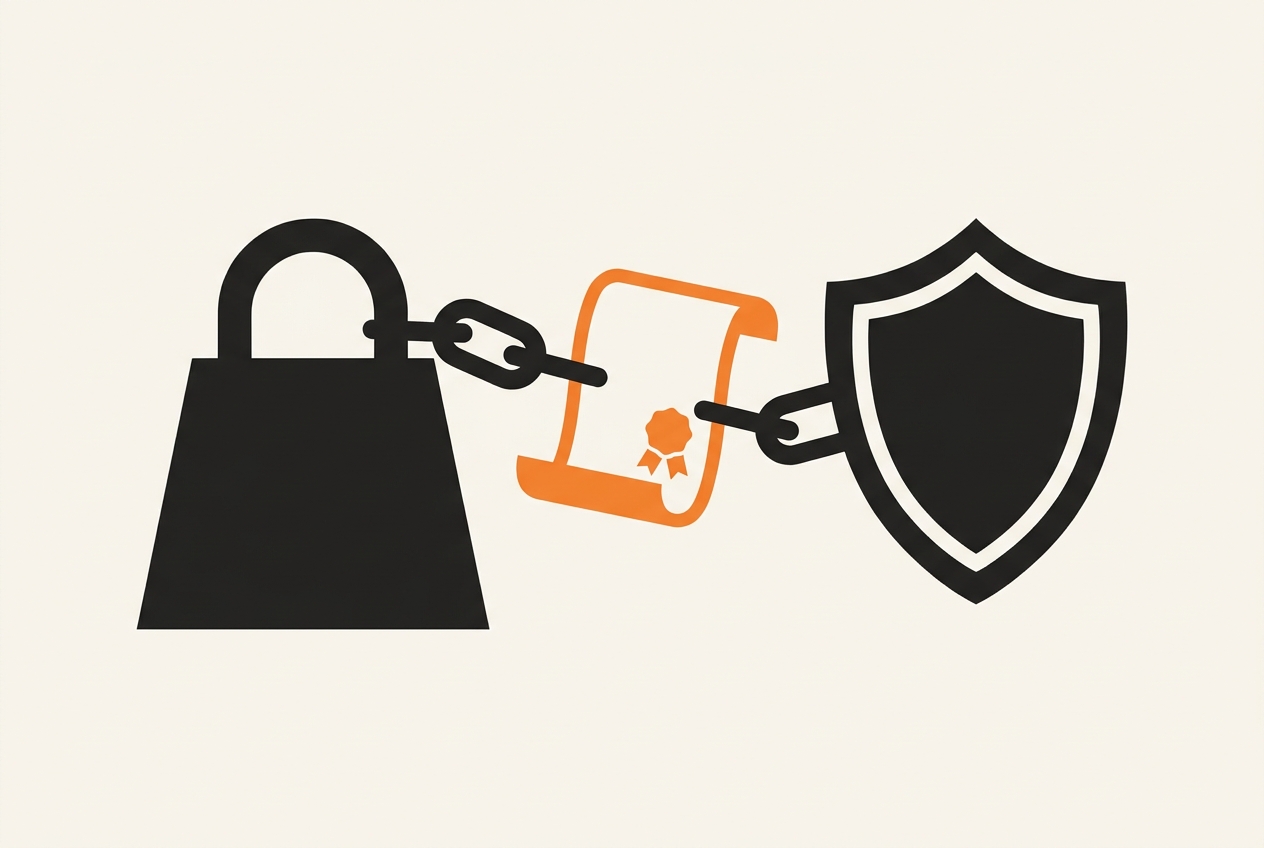
The brand that deploys an AI agent is legally and financially responsible for its output, regardless of whether a third-party model like OpenAI or Google Cloud produced the error. In the eyes of regulators and courts, an autonomous bot acts as a legal agent of the corporation, making the company liable for any misinformation, biased decisions, or contractual promises the bot makes. Mitigating this risk requires a shift from passive monitoring to active logic auditing and robust contractual indemnification.
Key takeaways
- The \"Agency\" Doctrine: Courts increasingly view AI bots as legal agents of the brand; if the bot promises a discount or misrepresents a policy, the brand must honor it.
- Vendor Immunity: Most Tier 1 AI providers (Google, Microsoft, AWS) include clauses that shift all output responsibility to the customer (you).
- 100% Coverage is Mandatory: Sampling 1% to 2% of calls is no longer a viable defense against systemic AI failure; complete conversation intelligence is required for compliance.
- Logic Over Sentiment: QA teams must transition from measuring \"tone\" to auditing the underlying decision-making logic of the AI.
Why can't you sue your AI vendor for bot errors?
When a human agent makes a mistake, the company is liable. When an AI agent makes a mistake, the legal reality remains the same. Most enterprises assume that if they use a platform like Salesforce or Zendesk, the vendor carries some of the risk for the bot's behavior. This is a dangerous misconception. Standard terms of service for almost every major AI provider specify that the end-user brand is responsible for the \"final output\" and its application.
If your bot, powered by OpenAI or Anthropic, hallucinates a refund policy that doesn't exist, the model provider is shielded by their terms. They provide the engine; you provide the guardrails. If the guardrails fail, the financial consequences—and the blow to brand equity—land solely on your balance sheet. This is why regulators are coming for your contact center's black box AI, demanding transparency in how these models are trained and monitored.
Does the law treat AI as a \"person\" or a \"tool\"?
Legal systems are rapidly gravitating toward the \"Agency\" doctrine. This means that if a brand presents an AI as a representative of the company, the brand is bound by that AI’s actions. A high-profile case involving a major airline recently proved this: the court ruled that the company had to honor a discount promised by its chatbot, even though the chatbot was factually wrong about the airline's policy. The court's reasoning was simple: the customer has no way of knowing the bot is hallucinating, and the company is responsible for the tools it chooses to deploy.
This shift makes the Gartner focus on data protection and domain-specific AI for 2026 even more critical. As brands move away from general-purpose models toward specialized CX agents, the burden of proof for \"reasonable care\" increases. You cannot claim you didn't know the bot could fail; you are expected to have built a system that prevents it.
How do you build a contractual shield?
While you cannot fully outsource your liability to a vendor, you can improve your position through specific Service Level Agreements (SLAs). CX leaders should look beyond uptime and latency. Instead, focus on data provenance and indemnification for third-party intellectual property claims. When integrating a CCaaS platform like Five9 or Genesys, ensure your contract defines who owns the training data and who is responsible when that data leads to a biased or discriminatory output.
However, contracts are only the second line of defense. The first line is operational oversight. This is where many teams fail because they use legacy QA methods for modern AI problems. To protect the brand, QA managers must stop listening and start auditing logic. If you aren't testing the edge cases of your AI's decision tree, you are essentially waiting for a lawsuit to find your bugs for you.
Why 100% coverage is the only compliance defense
In a traditional contact center, auditing 2% of calls was an industry standard. In an AI-driven contact center, that 2% leaves a 98% gap where liability can fester. If an AI agent systematically gives the wrong medical or financial advice to thousands of customers simultaneously, a 2% sample will not catch the trend until the damage is systemic.
Brands are now pairing their primary platforms with specialized conversation intelligence layers. For instance, teams often pair a CCaaS platform with a tool like Hear.ai to achieve 100% coverage across all interactions. By analyzing every conversation in real-time, a layer like Hear.ai can flag compliance risks or logic failures the moment they occur, rather than weeks later during a manual review. This level of oversight is becoming the baseline for \"reasonable care\" in legal proceedings. If you have the technology to monitor every call but choose not to, a court may find you negligent.
What is the role of research in benchmarking risk?
Leading research programs provide the roadmap for what \"good\" looks like in AI governance. Forrester often tracks how trust impacts the CX Index, noting that a single high-profile AI failure can erase years of loyalty gains. Similarly, the IDC Future of Customer Experience program highlights that tech spend is shifting toward \"trust-tech\"—tools that verify AI output rather than just generating it.
When reviewing your strategy, consult the Gartner Hype Cycle for Customer Service & Support. It helps distinguish between experimental AI features that carry high liability and mature technologies that have established guardrails. Most \"hallucination-prone\" generative features are still in the early stages of maturity, meaning they require the highest level of human-in-the-loop oversight.
FAQ
Can I be sued if my AI bot gives a customer incorrect information? Yes. Recent legal precedents suggest that companies are liable for the promises and information provided by their AI agents. The bot is considered a representative of your brand, and you are responsible for its accuracy.
Do AI vendors like OpenAI or Google provide indemnification for bot errors? Generally, no. Most AI model providers offer \"as-is\" services where the customer assumes all risk for the output. While some provide indemnification for copyright infringement, they rarely cover the costs of a bot giving bad advice to your customers.
How does conversation intelligence reduce liability? Conversation intelligence tools, such as Hear.ai, provide a full audit trail of every interaction. This allows you to identify and stop systemic errors immediately, proving to regulators that you are exercising active oversight rather than passive negligence.
Is 'hallucination' a valid legal defense? No. In fact, claiming a bot \"hallucinated\" can be seen as an admission that you deployed an unpredictable and unsafe tool in a production environment. Courts expect brands to implement Retrieval-Augmented Generation (RAG) and other guardrails to prevent such errors.
Liability is the price of autonomy. As you move toward fully autonomous support, your oversight budget must grow alongside your automation budget. The goal is not just to resolve tickets faster, but to ensure that every resolution stands up to legal and ethical scrutiny. Explore our guide on how to build an AI agent oversight framework in CX to start securing your deployment today."}